


Marsh Sandpiper
Tringa stagnatilis
- KingdomAnimalia (Animals)
- PhylumChordata (Cordats)
- ClassAves (Aus)
- OrderCharadriiformes (Caradriformes)
- FamilyScolopacidae (Sandpipers and Allies)
- GenusTringa (Shanks, Tattlers, and Allies)
- SpeciesTringa stagnatilis (Marsh Sandpiper)
The marsh sandpiper (Tringa stagnatilis) is a small wader. It is a rather small shank, and breeds in open grassy steppe and taiga wetlands from easternmost Europe to the Russian Far East. The genus name Tringa is the Neo-Latin name given to the green sandpiper by Aldrovandus in 1599 based on Ancient Greek trungas, a thrush-sized, white-rumped, tail-bobbing wading bird mentioned by Aristotle. The specific stagnatilis is from Latin stagnum, "swamp". Wikipedia →
Closest Relatives at Sundarbans National Park

Common Redshank
Tringa totanus

Common Greenshank
Tringa nebularia

Green Sandpiper
Tringa ochropus

Wood Sandpiper
Tringa glareola
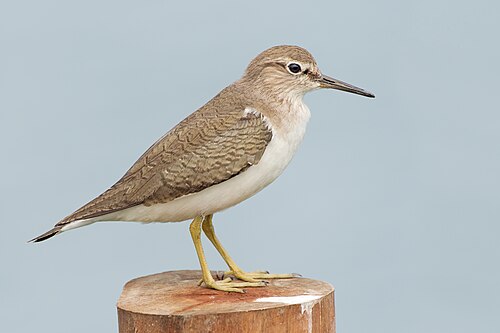
Common Sandpiper
Actitis hypoleucos

Whimbrel
Numenius phaeopus

Eurasian Curlew
Numenius arquata

Terek Sandpiper
Xenus cinereus

Curlew Sandpiper
Calidris ferruginea

Little Stint
Calidris minuta

Temminck's Stint
Calidris temminckii

Sanderling
Calidris alba
📅 Monthly Probability
Fewer than 5 records of Marsh Sandpiper at Sundarbans National Park — not enough to chart months honestly.
☀️ When They're Spotted
Most active during daytime hours (6am–6pm) · across all parks (global)
Global Distribution
Where this species is recorded worldwide. Restricted to human observations from 2019 onwards — the same kind of record and the same period the probabilities on this page are built from, so collar-tracking studies, camera-trap arrays and museum specimens are excluded. Around Santa Rosa that removes 5,924 GPS fixes from a handful of tagged jaguars.
where this species is recorded (GBIF density — it tracks where observers go, not how likely a sighting is) · parks where it occurs — tap a pin for the sighting probability there