


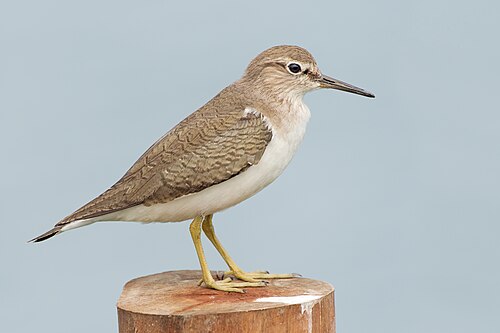
Green Sandpiper
Tringa ochropus
- KingdomAnimalia (Animals)
- PhylumChordata (Cordats)
- ClassAves (Aus)
- OrderCharadriiformes (Caradriformes)
- FamilyScolopacidae (Sandpipers and Allies)
- GenusTringa (Shanks, Tattlers, and Allies)
- SpeciesTringa ochropus (Green Sandpiper)
The green sandpiper (Tringa ochropus) is a small wader (shorebird) of the Old World. The green sandpiper represents an ancient lineage of the genus Tringa; its only close living relative is the solitary sandpiper (T. solitaria). They both have brown wings with little light dots and a delicate but contrasting neck and chest pattern. In addition, both species nest in trees, unlike most other scolopacids. Given its basal position in Tringa, it is fairly unsurprising that suspected cases of hybridisation between this species and the common sandpiper (A. hypoleucos) of the sister genus Actitis have been reported. Wikipedia →
20–30% of wildlife watchers report a Green Sandpiper sighting in Bale Mountains National Park, based on 35 days of visitor records from GBIF citizen-science data.
Closest Relatives at Bale Mountains National Park

Wood Sandpiper
Tringa glareola

Common Greenshank
Tringa nebularia

Marsh Sandpiper
Tringa stagnatilis

Little Stint
Calidris minuta
Common Sandpiper
Actitis hypoleucos

African Snipe
Gallinago nigripennis

Spot-breasted Lapwing
Vanellus melanocephalus

Black-winged Lapwing
Vanellus melanopterus

African Wattled Lapwing
Vanellus senegallus

Spur-winged Lapwing
Vanellus spinosus
📅 Monthly Probability
☀️ When They're Spotted
Most active during daytime hours (6am–6pm) · across all parks (global)
Global Distribution
Where this species is recorded worldwide. Restricted to human observations from 2019 onwards — the same kind of record and the same period the probabilities on this page are built from, so collar-tracking studies, camera-trap arrays and museum specimens are excluded. Around Santa Rosa that removes 5,924 GPS fixes from a handful of tagged jaguars.
where this species is recorded (GBIF density — it tracks where observers go, not how likely a sighting is) · parks where it occurs — tap a pin for the sighting probability there
Parks Where Found
Quick answers
What are the chances of seeing a Green Sandpiper in Bale Mountains National Park?
About 21% of wildlife watchers report a Green Sandpiper sighting in Bale Mountains National Park, based on 35 days of visitor records from GBIF citizen-science data.
When is the best time to see Green Sandpiper in Bale Mountains National Park?
January has the highest sighting rate for Green Sandpiper in Bale Mountains National Park in our monthly data.