


Pectoral Sandpiper
Calidris melanotos
- KingdomAnimalia (Animals)
- PhylumChordata (Cordats)
- ClassAves (Aus)
- OrderCharadriiformes (Caradriformes)
- FamilyScolopacidae (Sandpipers and Allies)
- GenusCalidris (Calidris Sandpipers)
- SpeciesCalidris melanotos (Pectoral Sandpiper)
The pectoral sandpiper (Calidris melanotos), often abbreviated pec, is a small, migratory wader that breeds in arctic regions of North America and Asia, wintering in South America and Oceania. It eats small invertebrates. Its nest, a hole scraped in the ground and with a thick lining, is deep enough to protect its four eggs from the cool breezes of its breeding grounds. The pectoral sandpiper is 19–23 cm (7.5–9.1 in) long, with a wingspan of 38–46 cm (15–18 in). Wikipedia →
Closest Relatives at Table Mountain National Park

Sanderling
Calidris alba

Baird's Sandpiper
Calidris bairdii

Little Stint
Calidris minuta

Curlew Sandpiper
Calidris ferruginea

Ruff
Calidris pugnax

Upland Sandpiper
Bartramia longicauda

Whimbrel
Numenius phaeopus

Ruddy Turnstone
Arenaria interpres

Common Greenshank
Tringa nebularia

Bar-tailed Godwit
Limosa lapponica
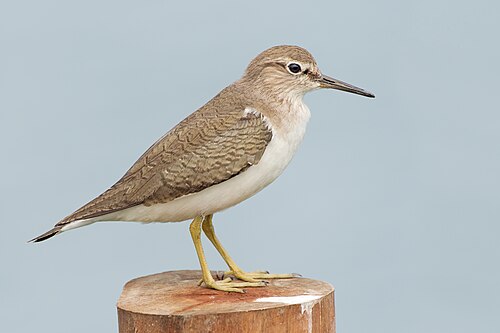
Common Sandpiper
Actitis hypoleucos

African Snipe
Gallinago nigripennis
📅 Monthly Probability
Fewer than 5 records of Pectoral Sandpiper at Table Mountain National Park — not enough to chart months honestly.
☀️ When They're Spotted
Most active during daytime hours (6am–6pm) · across all parks (global)
Global Distribution
Where this species is recorded worldwide. Restricted to human observations from 2019 onwards — the same kind of record and the same period the probabilities on this page are built from, so collar-tracking studies, camera-trap arrays and museum specimens are excluded. Around Santa Rosa that removes 5,924 GPS fixes from a handful of tagged jaguars.
where this species is recorded (GBIF density — it tracks where observers go, not how likely a sighting is) · parks where it occurs — tap a pin for the sighting probability there