


Common Tern
Sterna hirundo
- KingdomAnimalia (Animals)
- PhylumChordata (Cordats)
- ClassAves (Aus)
- OrderCharadriiformes (Caradriformes)
- FamilyLaridae (Gulls, Terns, and Skimmers)
- GenusSterna (Typical Terns)
- SpeciesSterna hirundo (Common Tern)
The common tern (Sterna hirundo) is a seabird in the family Laridae. This bird has a circumpolar distribution, its four subspecies breeding in temperate and subarctic regions of Europe, Asia and North America. It is strongly migratory, wintering in coastal tropical and subtropical regions. Breeding adults have light grey upperparts, white to very light grey underparts, a black cap, orange-red legs, and a narrow pointed bill. Depending on the subspecies, the bill may be mostly red with a black tip or all black. There are several similar species, including the partly sympatric Arctic tern, which can be separated on plumage details, leg and bill colour, or vocalisations. Wikipedia →
<5% of wildlife watchers report a Common Tern sighting in Sundarbans National Park, based on 21 days of visitor records from GBIF citizen-science data.
Closest Relatives at Sundarbans National Park

Little Tern
Sternula albifrons

Brown-headed Gull
Chroicocephalus brunnicephalus

Whiskered Tern
Chlidonias hybrida
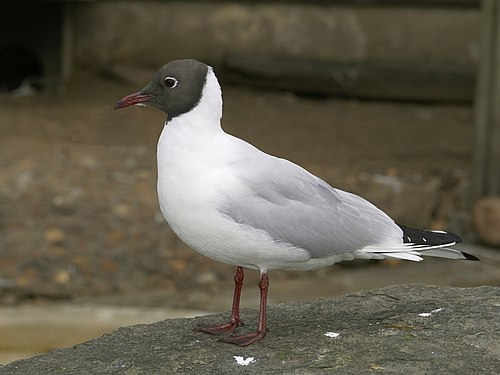
Black-headed Gull
Chroicocephalus ridibundus

Pallas's Gull
Ichthyaetus ichthyaetus

Lesser Black-backed Gull
Larus fuscus

Caspian Tern
Hydroprogne caspia

Common Sandpiper
Actitis hypoleucos

Whimbrel
Numenius phaeopus

Eurasian Curlew
Numenius arquata

Common Redshank
Tringa totanus

Terek Sandpiper
Xenus cinereus
📅 Monthly Probability
☀️ When They're Spotted
Most active during daytime hours (6am–6pm) · across all parks (global)
Global Distribution
Where this species is recorded worldwide. Restricted to human observations from 2019 onwards — the same kind of record and the same period the probabilities on this page are built from, so collar-tracking studies, camera-trap arrays and museum specimens are excluded. Around Santa Rosa that removes 5,924 GPS fixes from a handful of tagged jaguars.
where this species is recorded (GBIF density — it tracks where observers go, not how likely a sighting is) · parks where it occurs — tap a pin for the sighting probability there
Parks Where Found
Quick answers
What are the chances of seeing a Common Tern in Sundarbans National Park?
About 2% of wildlife watchers report a Common Tern sighting in Sundarbans National Park, based on 21 days of visitor records from GBIF citizen-science data.
When is the best time to see Common Tern in Sundarbans National Park?
September has the highest sighting rate for Common Tern in Sundarbans National Park in our monthly data.